hymnsandbooks

Friday, 19 October 2012

NEW REMEMBRANCE SUNDAY HYMN - VETERANS' DAY HYMN


Once crimson poppies bloomed
out in a foreign field,
each memory reminds
where brutal death was sealed.
The crimson petals flutter down,
still hatred forms a thorny crown.


For in this present time
we wait in vain for peace,
each generation cries,
each longing for release,
while war still plagues the human race
and families seek a hiding place.


How long will human life
suffer for human greed?
How long must race or pride,
wealth, nationhood or creed
be reasons justifying death
to suffocate a nation's breath?


For everyone who dies
we share a quiet grief,
the pain of loss remains,
time rarely brings relief,
and so we will remember them
and heaven sound a loud amen.

© Andrew Pratt 15/10/2012 Pleas include on your CCL return
andrewpratt@btconnect.com
Tune: LITTLE CORNARD 

HYMNS POSTED ON THIS BLOG MAY BE USED FREELY LOCALLY WITH ACKNOWLEDGEMENT. TO PUBLISH FOR PROFIT PLEASE CONTACT THE AUTHOR.
PLEASE INCLUDE ON YOUR CCL RETURN

Monday, 8 October 2012

Hymns and Songs

Find Hymns and Songs fast using HymnQuest - http://www.hymnquest.com/ 

Find Hymns, songs, prayers and much, much else at twelvebaskets - 
http://www.twelvebaskets.co.uk

Wednesday, 8 August 2012

Simple faith or ignorance? - a hymn

To simply bask in ignorance,
to shy away from facts,
can masquerade as 'simple faith',
or veil our foolish acts;
and then the world will look at us,
a church so old and stale,
no longer worth a second glance,
a church beyond the pale.

While Jesus chose a simple life
his wits were sharply honed,
he turned the tables on the ones
who'd have a woman stoned.
He argued with some learned men
and beat them at their game,
used intellect, intelligence,
to finely tune his aim.

And in the world we know today
we need that self-same will,
to keep abreast of politics,
of science, art and skill;
to use our words in argument,
while not denying facts,
then backing up the things we say
with faithful, loving acts.
© Andrew Pratt 7/8/2012
Tune: BETHLEHEM (also known as CLAUDIUS [Fink]); NOEL (Sullivan)
Metre: CMD
HYMNS POSTED ON THIS BLOG MAY BE USED FREELY LOCALLY WITH ACKNOWLEDGEMENT. TO PUBLISH FOR PROFIT PLEASE CONTACT THE AUTHOR. Andrew Pratt lectures at Luther King House, The Partnership for Theological Education, Manchester as a Methodist Tutor at Hartley Victoria College

Tuesday, 15 May 2012

Progressive hymn: A cuckoo in the holy nest

A cuckoo in the holy nest,
can I admit to what I see?
A Jesus who is rough and hard,
a normal bloke like you and me,
a Jesus who could moan a bit,
a Jesus who could weep and sigh,
a Jesus who could laugh and joke,
a Jesus who could bleed and die.

Oh sometimes, yes, he's meek and mild,
but never when he ought to be;
forever giving disrespect
to leaders like that Pharisee.
And yet that name, 'how sweet the sound',
masks who he was and gives us pause
to sanctify humanity,
to take away all human flaws.

And what is left for us to praise?
Emasculated God lies dead,
right there beside a human corpse,
was it, I wonder, what I said?
Perhaps I ought to trust the lie
that if I doubt my God is dead?
But faith is possibility:
that hope is latent in my head!
© Andrew Pratt 18/3/2012
Inspired by Sydney Carter’s Rock of Doubt chap 3

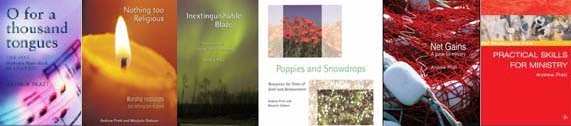
HYMNS POSTED ON THIS BLOG MAY BE USED FREELY LOCALLY WITH ACKNOWLEDGEMENT. TO PUBLISH FOR PROFIT PLEASE CONTACT THE AUTHOR. For more hymns go to Hymns page For Books by Andrew Pratt follow LINKS on the Links page. Books are available on the following sites: Amazon, Stainer & Bell Ltd, Twelvebaskets, SCM-Canterbury Press. Andrew Pratt lectures at Luther King House, The Partnership for Theological Education, Manchester as a Methodist Tutor at Hartley Victoria College

Wednesday, 15 February 2012

WOMEN BISHOPS, THE CHURCH OF ENGLAND AND METHODISM


Since the Church of England seems to be side-stepping again the opportunity to give women equality by allowing those who object to women Bishops to avoid such episcopal oversight there is a need for the Methodist Church, with its Arminian heritage, to consider its position in its Covenant relationship with the C of E. It is my belief that Methodism should, at the least, state that it can move no further in its relationship with the C of E until the C of E takes away all bars against women being able to have access to all offices and roles within the church that are open to men and, significantly, there should be no loop hole to accommodate those who object to such equality.
This statement requires some clarification.
We need to remember that it is the Church of England, and not the whole Anglican communion, that currently does not allow women to hold episcopal office.
The Methodist Church for many years has allowed women to exercise what the C of E would regard as a priestly ministry and, because of the nature of Methodist governance, an episcopal ministry. Any truly Covenantal relationship is dependent on a mutual recognition of ministries. When the Covenant was signed it was clear that this was not possible at that time. Some Methodists spoke and voted against the Covenant, not in an anti-ecumenical spirit, but in recognition of the equality of all people before God. Some voted in favour of the Covenant in good faith that the Church of England was at least moving towards such recognition. This has now proved, for the time being at least, not to be the case.
Some will want to argue male priority based on the authority of scripture and the maleness of Jesus. The fact that not all theologians or denominations reach this conclusion underlines the understanding that doctrine is a human construct based on human interpretation rather than God given law. For those who want, at the extreme, to see the presence of women in ministry as heretical, it is worth remembering that, from a Jewish perspective, Christianity was (and is) a heresy. Within the young church the acceptance of Gentiles as Christians was equally heretical. I need not rehearse the fact that we are all selective in scripture that we choose to be normative (food laws, laws against mixed fabrics, stoning of adulterers and so on seem not to be widely advocated). If all of this is accepted then the exclusion of women from the episcopacy has to be seen as a human construct. If black people were similarly excluded that would be deemed to be racist. Yet we do not need a long memories to know that in South Africa in my life time similar arguments to those being exercised to exclude women were being used to justify Apartheid, a heresy of which, ultimately, the Dutch Reformed Church in South Africa repented.
The Methodist Church should defend the place of women in its own ministry and make it clear to the C of E that the Covenant relationship, into which it entered in good faith, is no longer tenable, and neither will it be until the C of E recognises the equality of women without any reserve. In the meantime it should be shown that Methodists are not anti-ecumenical by strengthening relationships with those denominations which demonstrate similar or greater inclusivity.